

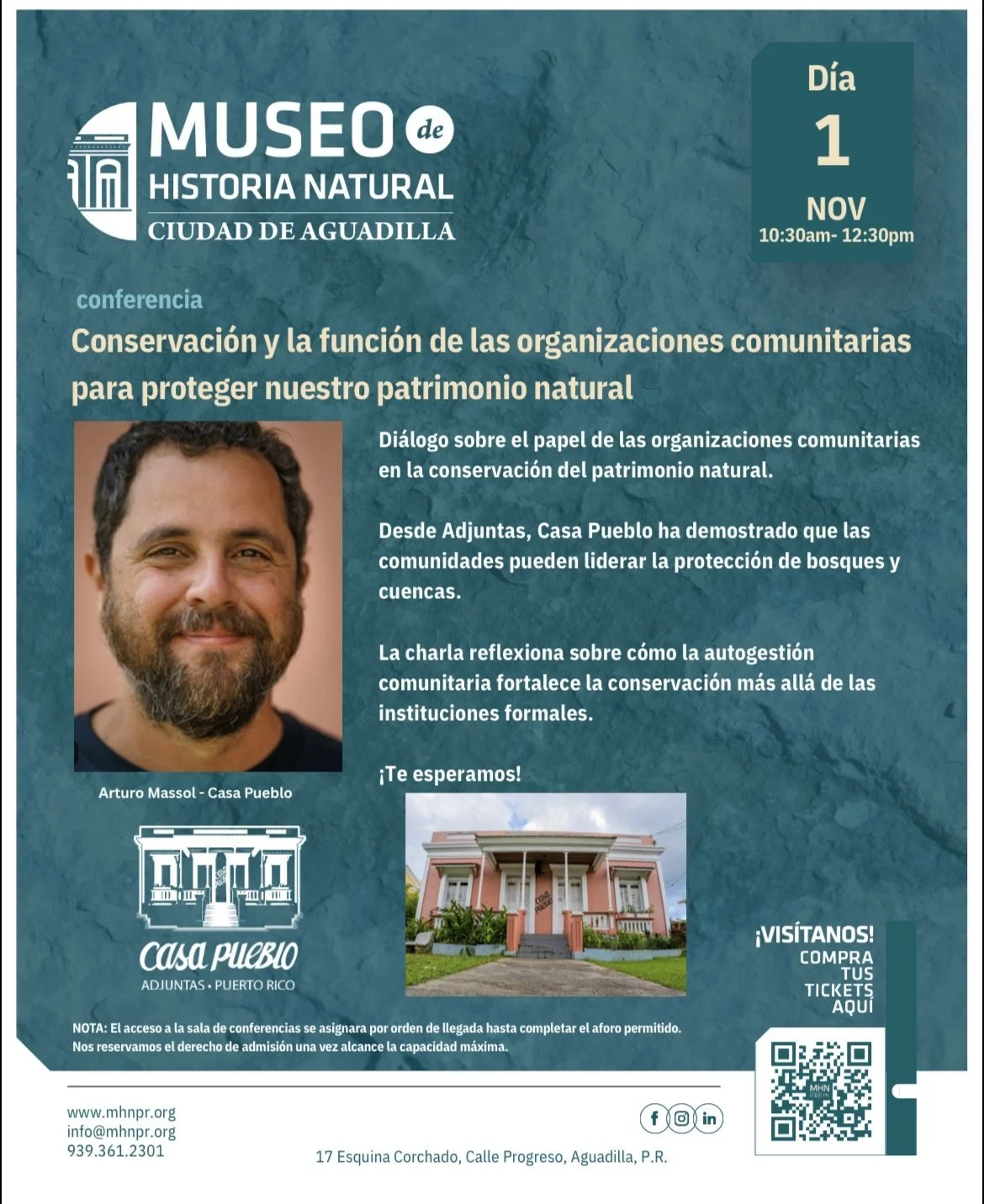
Conservation and the role of community organizations in protecting our natural heritage
Dialogue on the role of community organizations in the conservation of natural heritage. From Adjuntas, Casa Pueblo has shown that communities can lead the protection of forests and watersheds.
The talk reflects on how community self-management strengthens conservation beyond formal institutions.
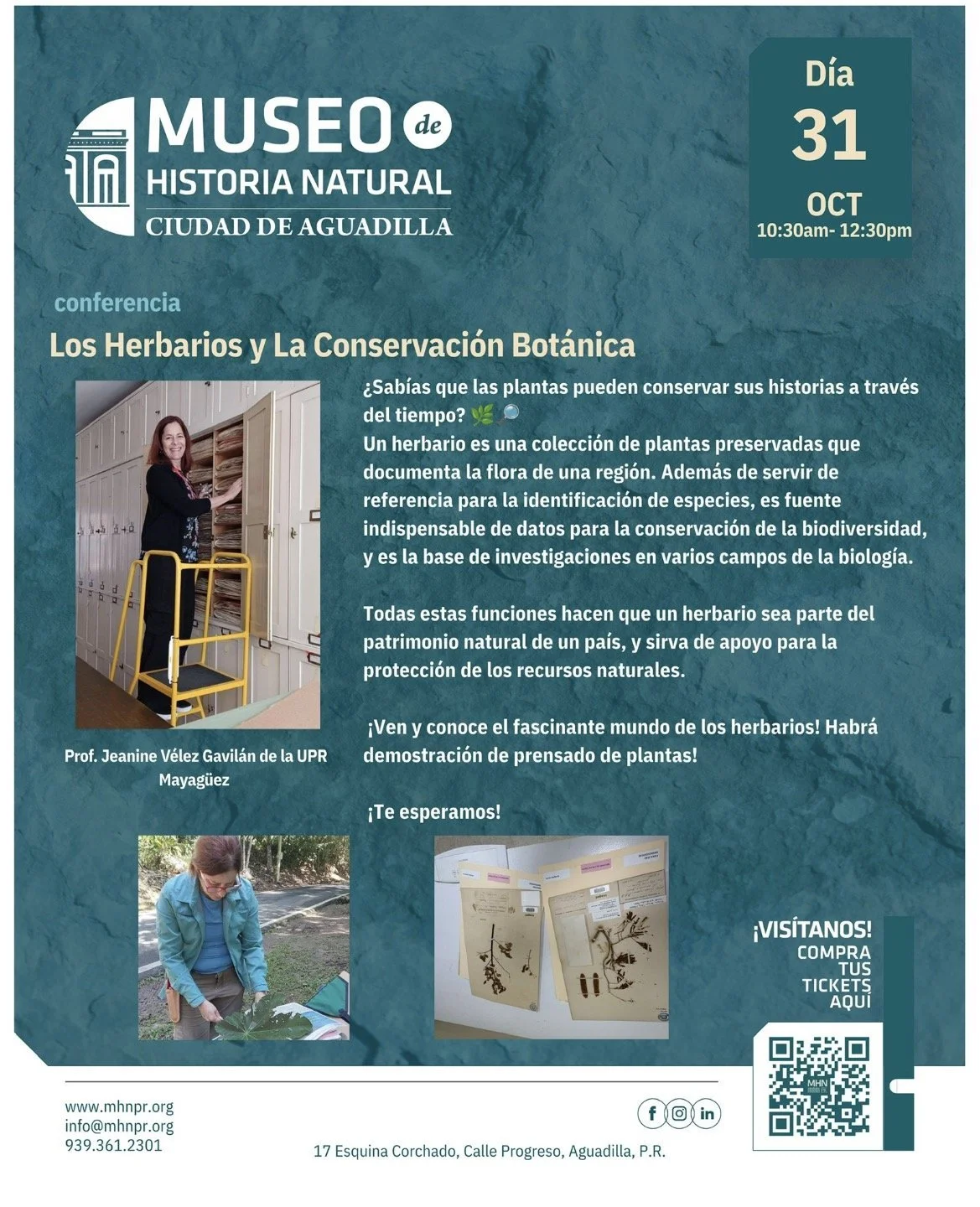
Herbaria and botanical conservation
Speaker: Prof. Jeanine Vélez Gavilán of UPR Mayagüez
Did you know that plants can preserve their stories through time?
A herbarium is a collection of preserved plants that documents the flora of a region. Besides serving as a reference for species identification, it is an indispensable source of data for biodiversity conservation, and it is the basis of research in several fields of biology.
All these functions make a herbarium part of a country’s natural heritage, and a support for the protection of natural resources.
Come and discover the fascinating world of herbaria! There will be a plant-pressing demonstration and much more!
We look forward to seeing you!
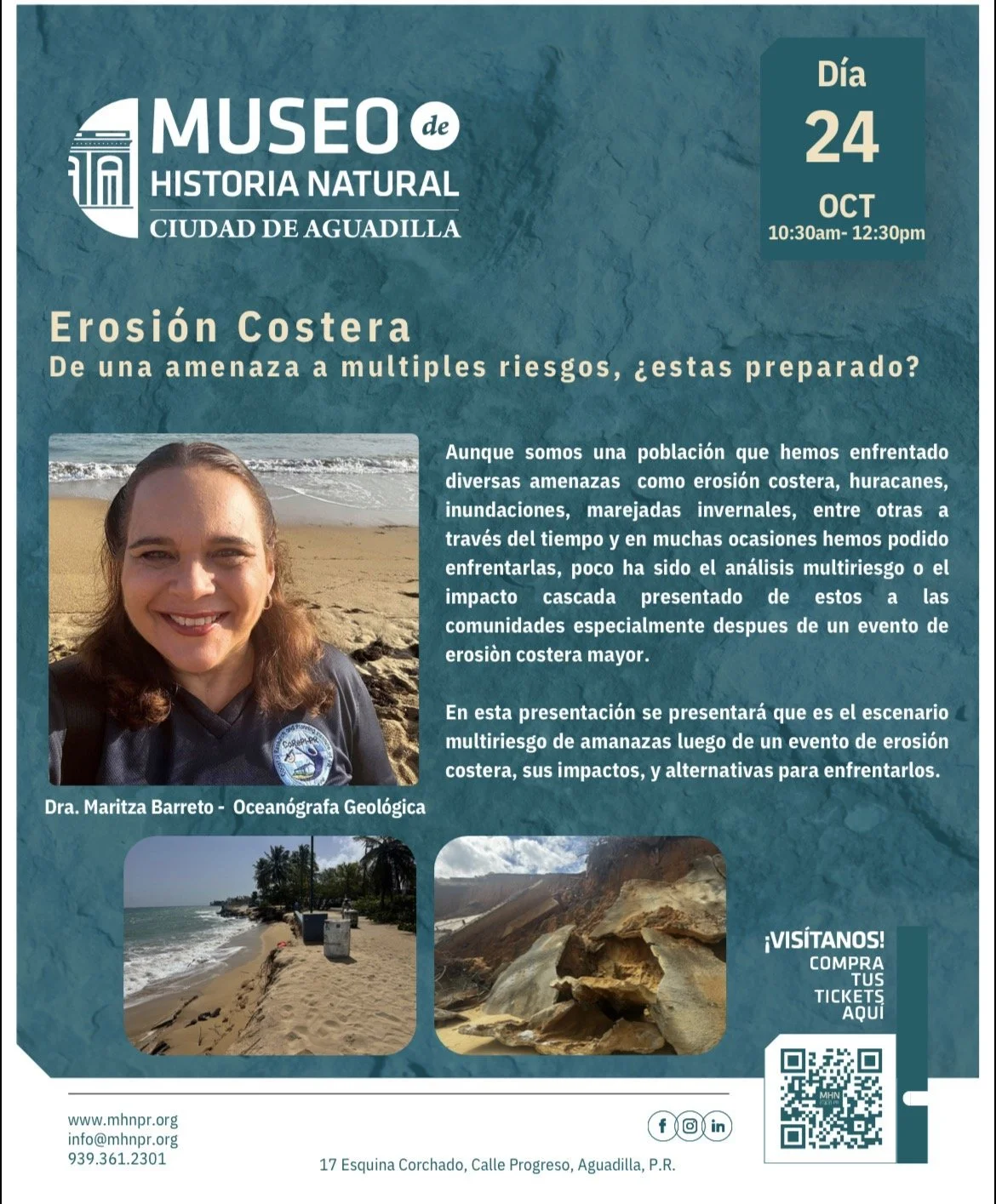
Coastal erosion
Coastal erosion: from a threat to multiple risks: are you prepared?
Although we are a population that has faced various threats such as coastal erosion, hurricanes, floods and winter swells, among others, over time, and on many occasions we have been able to face them, there has been little multi-risk analysis or study of the cascading impact these have on communities, especially after a major coastal erosion event.
This presentation will show what the multi-risk threat scenario is after a coastal erosion event, its impacts, and alternatives to face them.
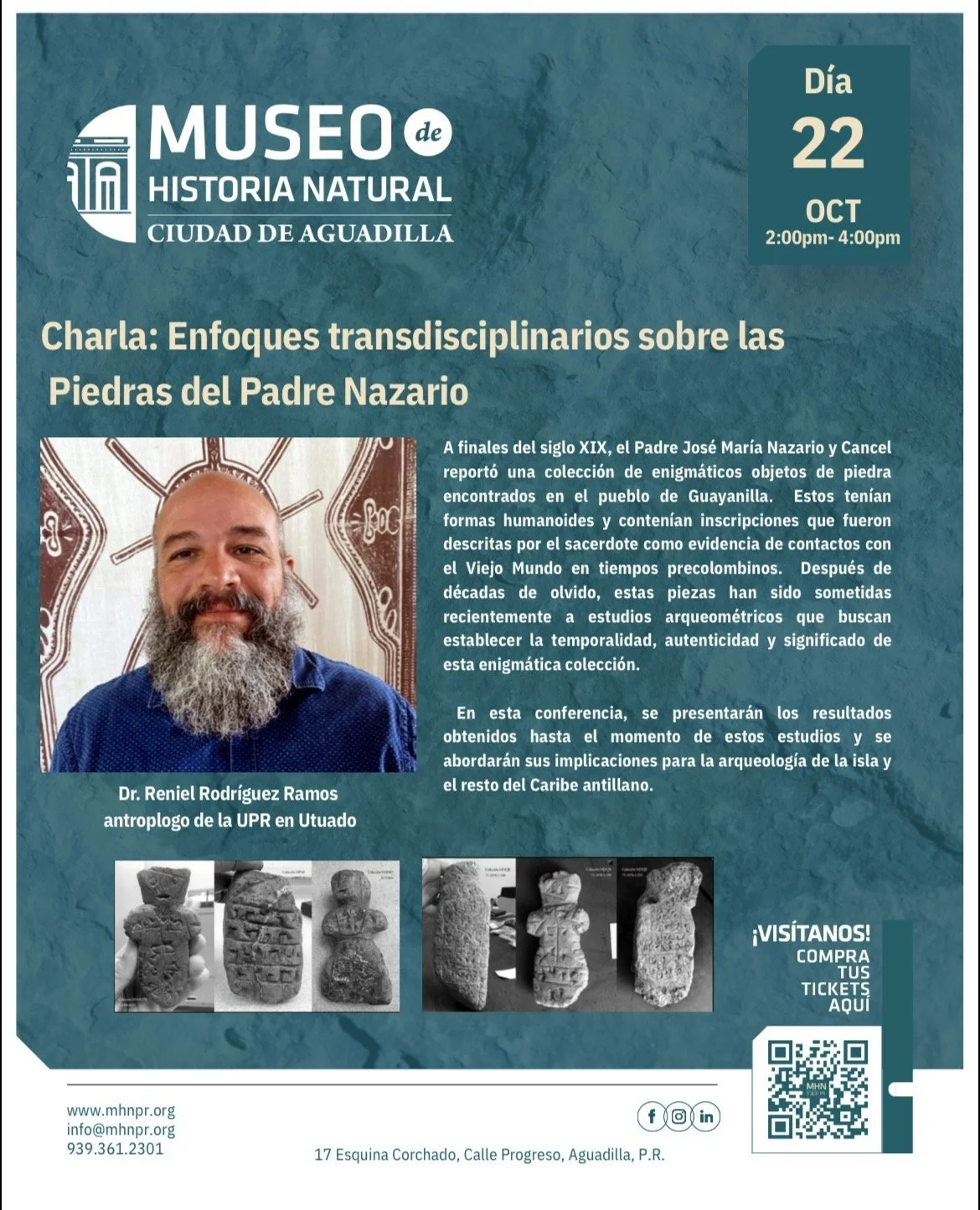
Transdisciplinary approaches to the Padre Nazario Stones
Talks at the museum
Speaker:
Dr. Reniel Rodríguez Ramos - Professor of anthropology at UPR UTUADO
October 22 | 2:00 pm - 4:00pm
At the end of the 19th century, Father José María Nazario y Cancel reported a collection of enigmatic stone objects found in the town of Guayanilla. They had humanoid shapes and bore inscriptions that were described by the priest as evidence of contact with the Old World in pre-Columbian times. After decades of neglect, these pieces have recently been subjected to archaeometric studies that seek to establish the temporality, authenticity and meaning of this enigmatic collection.
In this lecture, the results obtained so far from these studies will be presented and their implications for the archaeology of the island and the rest of the Antillean Caribbean will be addressed.
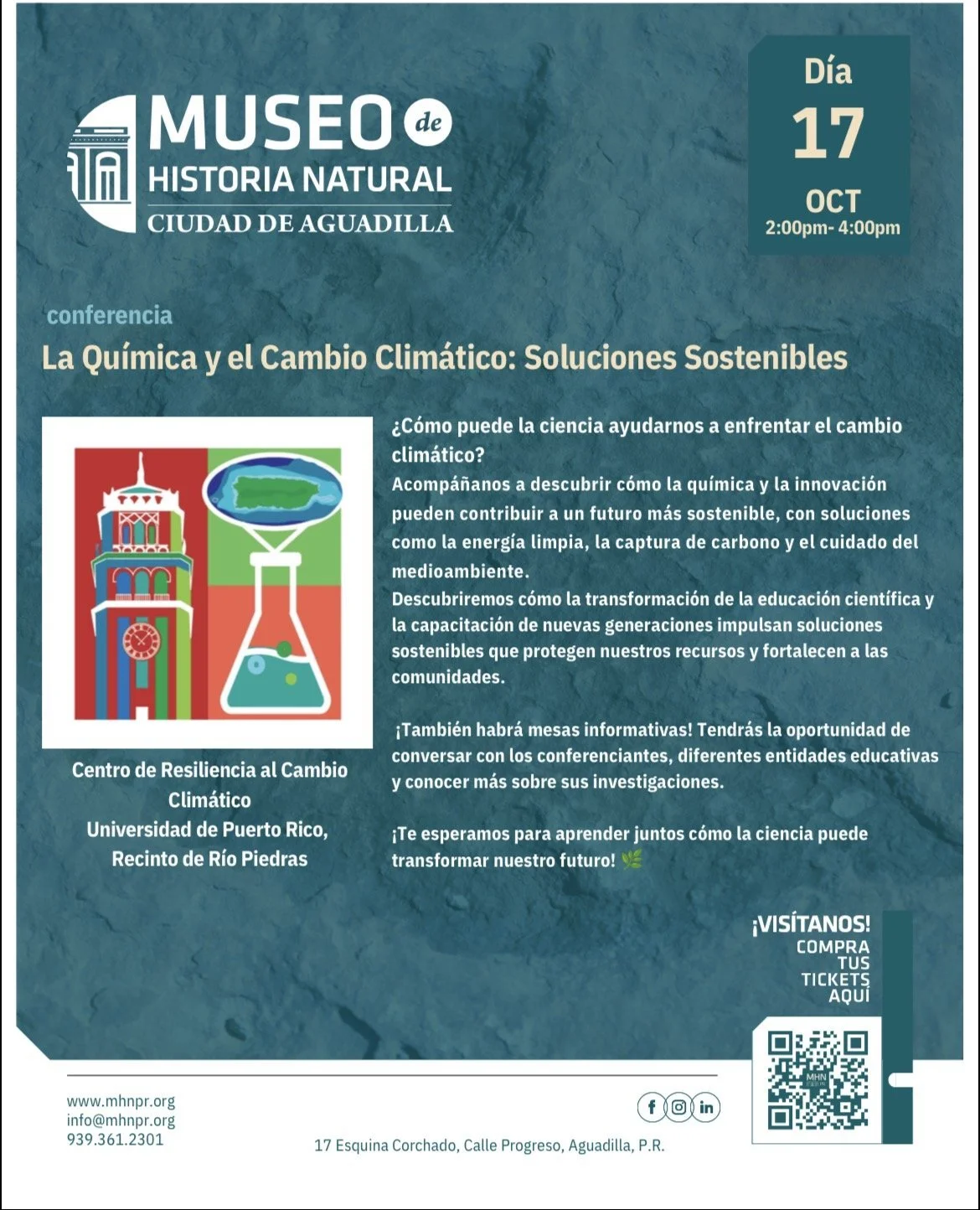
Chemistry and Climate Change: Sustainable Solutions
How can science transform our future in the face of the climate crisis?
This lecture explores the fundamental role of chemistry as an engine of innovation for environmental resilience. Inspired by initiatives such as those of the Climate Change Resilience Center of the University of Puerto Rico (UPR-CRCC), we will address how research in green chemistry, carbon capture, environmental monitoring and the development of clean energy offer concrete answers to the challenges of global warming. We will also discover how the transformation of science education and the training of new generations drive sustainable solutions that protect our resources and strengthen communities.
Join us and discover how science is leading the way toward a more sustainable planet!
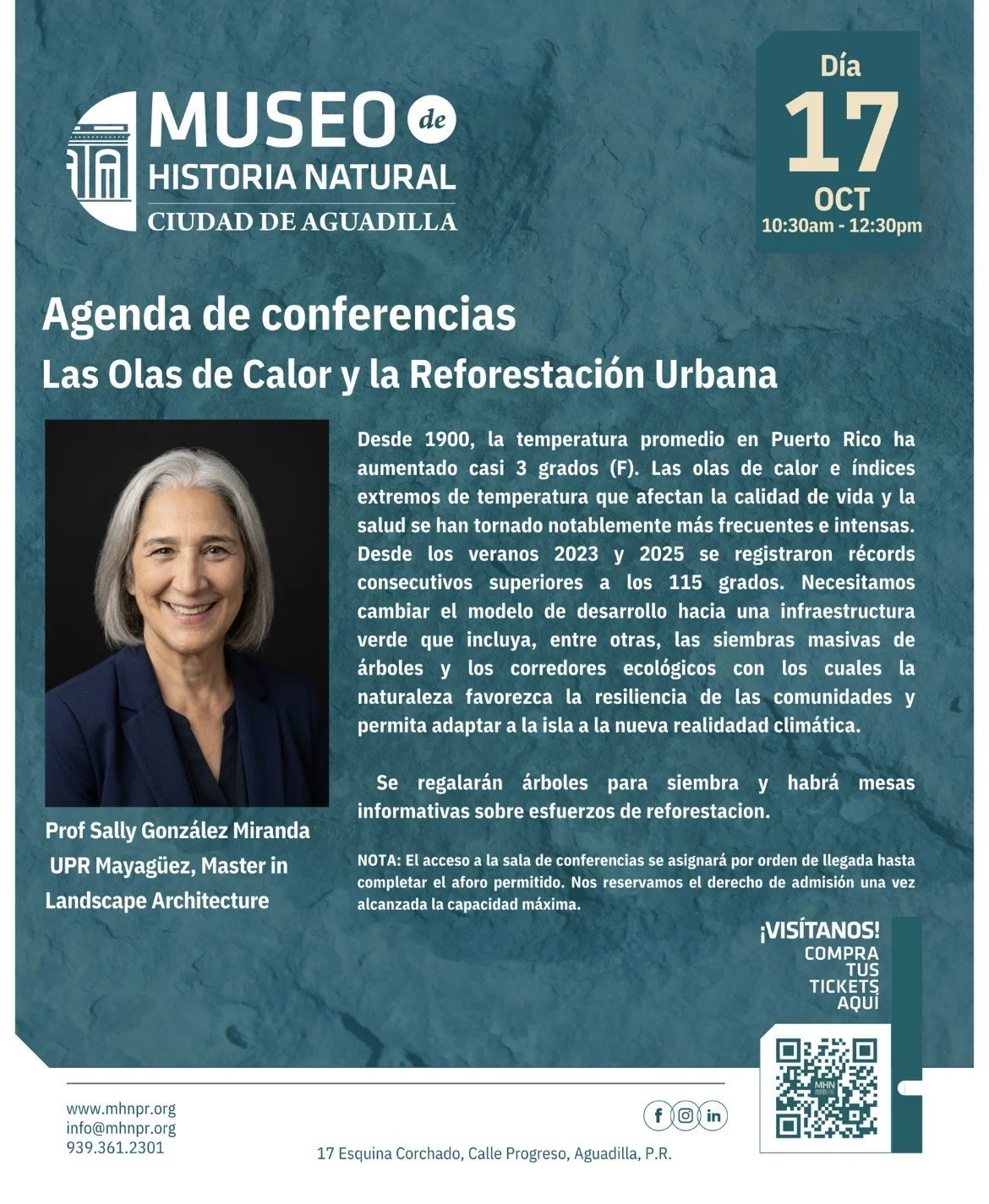
Heat Waves and Urban Reforestation
Lecture series
Prof Sally González Miranda - UPR Mayagüez, Master in Landscape Architecture
Since 1900, the average temperature in Puerto Rico has increased by almost 3 degrees (F). Heat waves and extreme temperature indices that affect quality of life and health have become notably more frequent and intense. In the summers of 2023 and 2025, consecutive records above 115 degrees were recorded. We need to change the development model toward a green infrastructure that includes, among others, massive tree planting and ecological corridors with which nature favors the resilience of communities and allows the island to adapt to the new climate reality.
Trees will be given away for planting and there will be information tables on reforestation efforts.
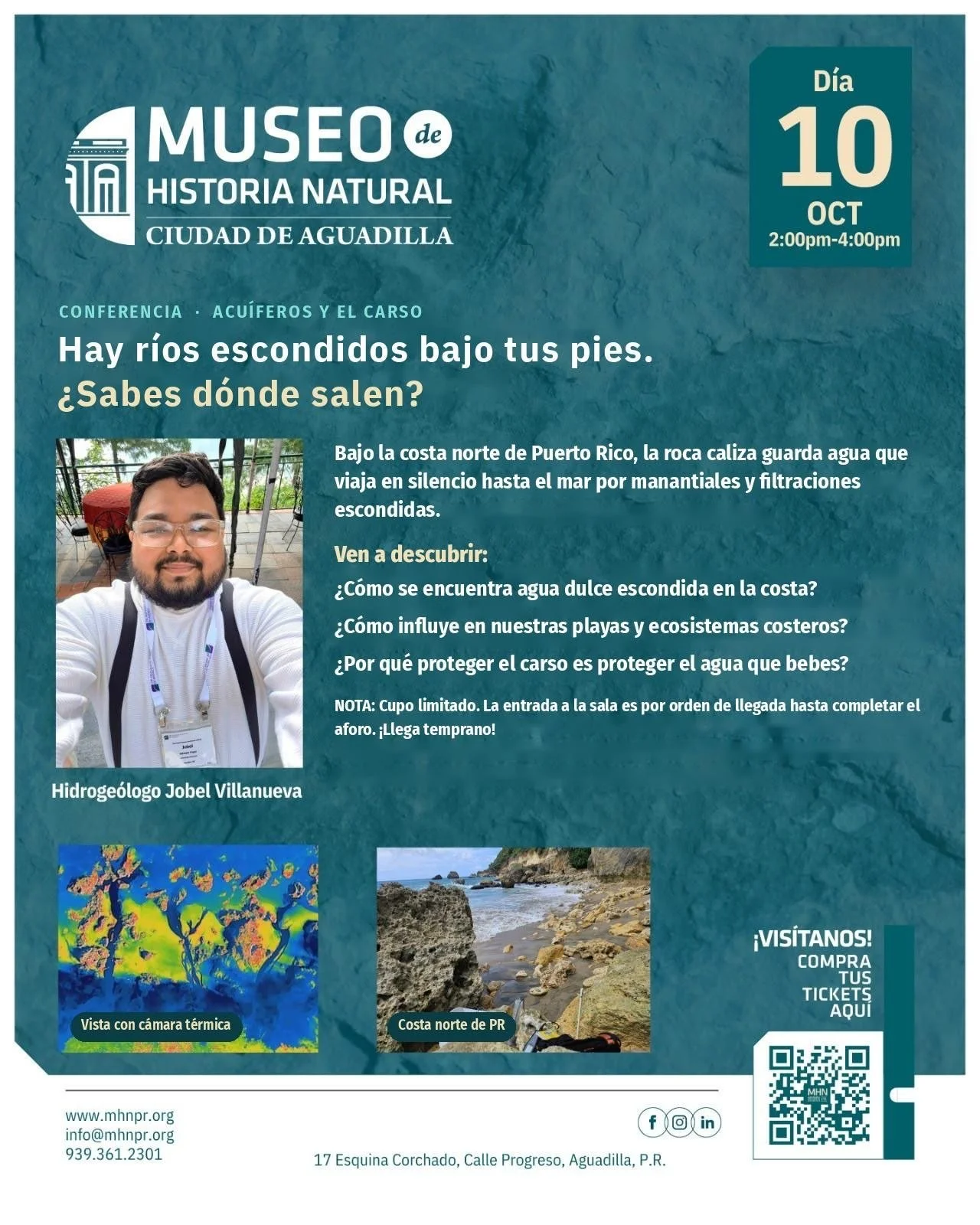
Talk: Aquifers and the Karst
Lecture series
Speaker: Hydrogeologist Jobel Villanueva
The limestone aquifer system of the north coast of Puerto Rico stores and transports groundwater that reaches the sea through springs and coastal seepage. We will discover how these discharges are identified and studied, and how they influence coastal ecosystems. We will also talk about the importance of protecting the karst and our groundwater resources.
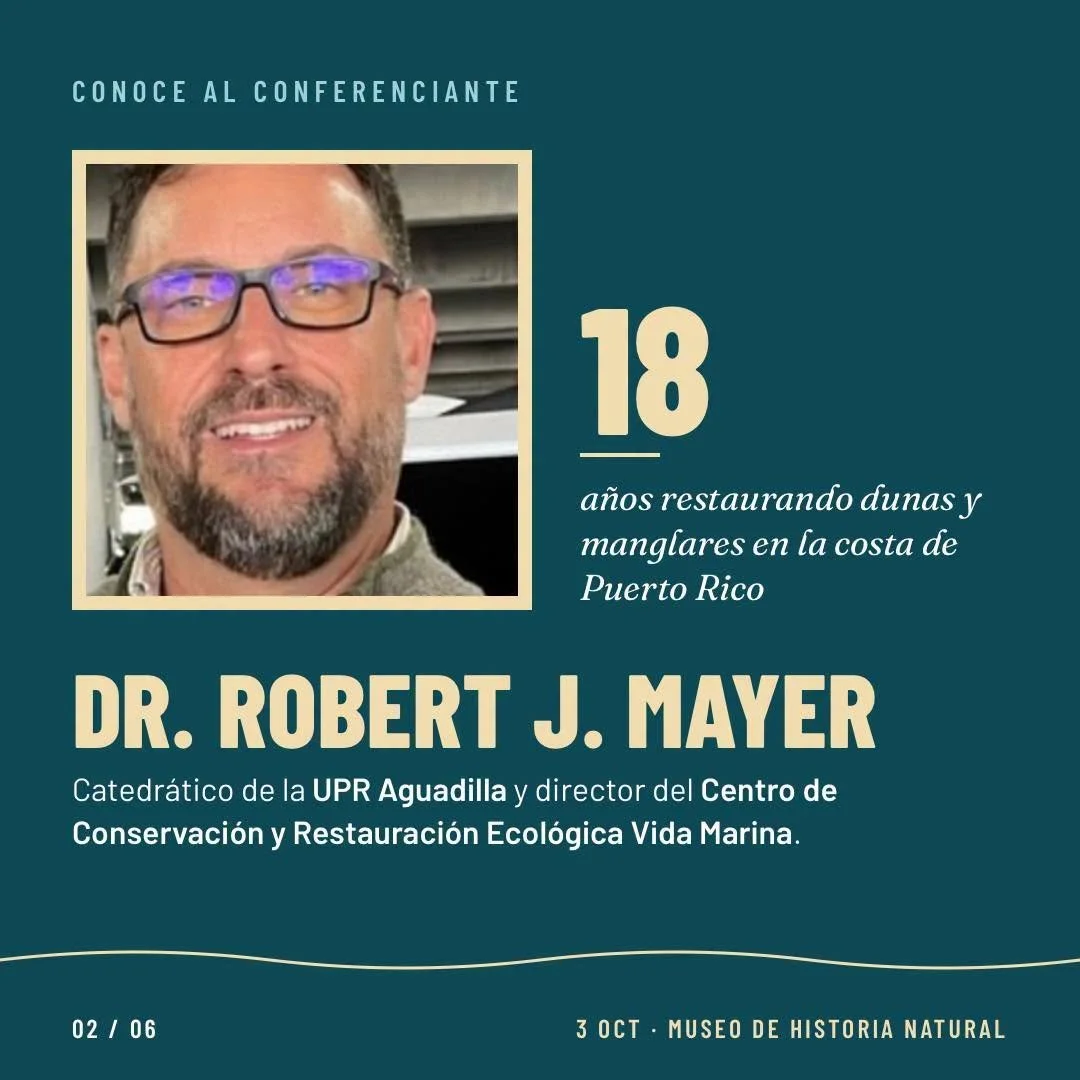
Talk: Coastal Restoration
What do mangroves, dunes and the protection of our coasts have in common?
The answer lies in 18 years of fieldwork, research and ecological restoration that Dr. Robert J. Mayer will present in a special lecture at the Museo de Historia Natural.
If you are interested in nature, conservation or the environmental future of Puerto Rico, this is a unique opportunity to learn about real projects that have helped strengthen our coastal ecosystems.
We look forward to seeing you to learn how small actions can generate great benefits for our natural resources.
October 3 | 10:30 a.m. - 12:30 p.m.
Museo de Historia Natural, Aguadilla
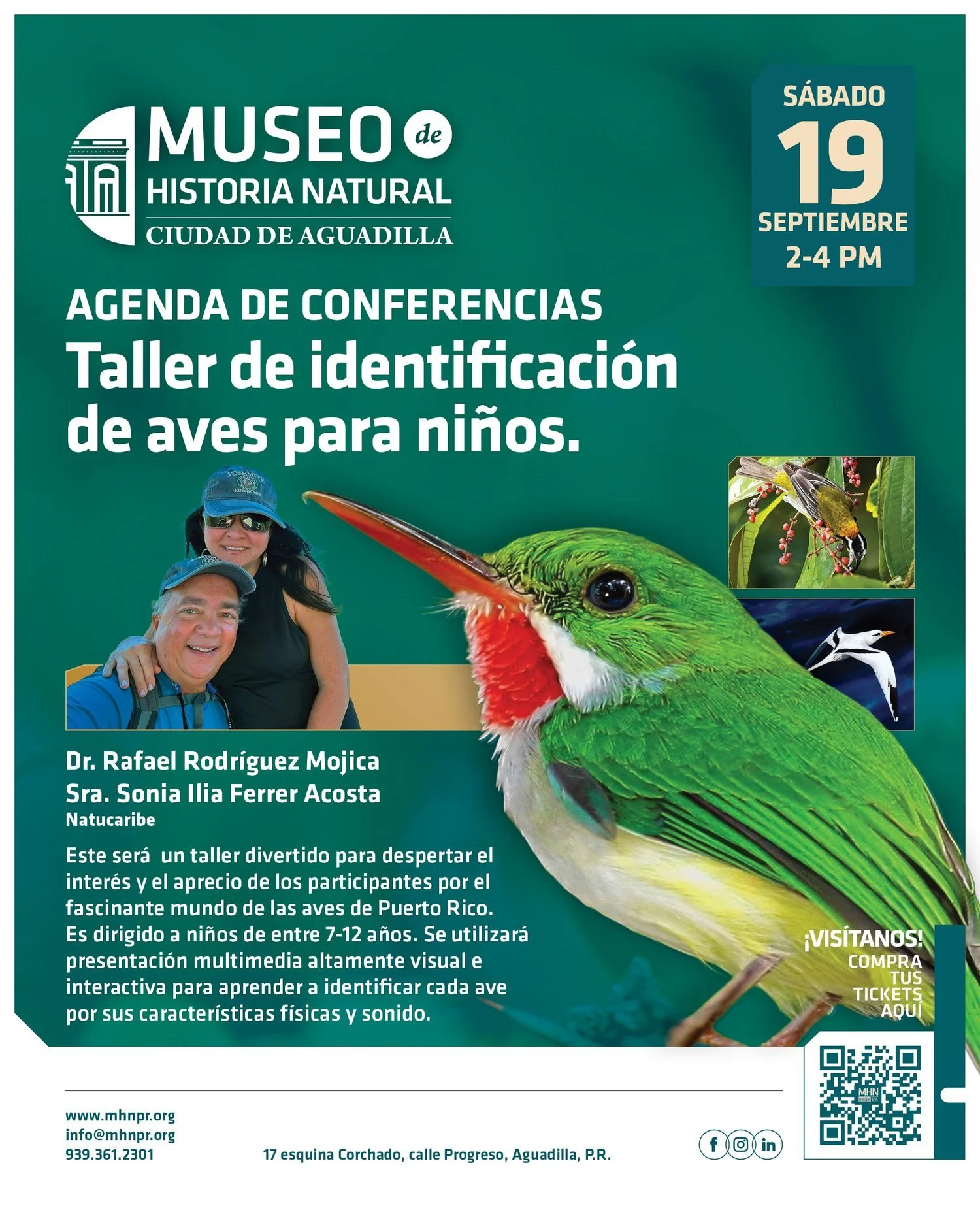
Bird Identification Workshop for Children
Dr. Rafael Rodriguez Mojica
Mrs. Sonia Ilia Ferrer Acosta
Natucaribe
This will be a fun workshop to awaken the participants’ interest in and appreciation for the fascinating world of the birds of Puerto Rico.
It is aimed at children between 7-12 years old. A highly visual and interactive multimedia presentation will be used to learn to identify each bird by its physical characteristics and sound.
VISIT US!
BUY YOUR TICKETS HERE
939.361.2301
17 corner of Corchado, Progreso street
Aguadilla, PR 00603
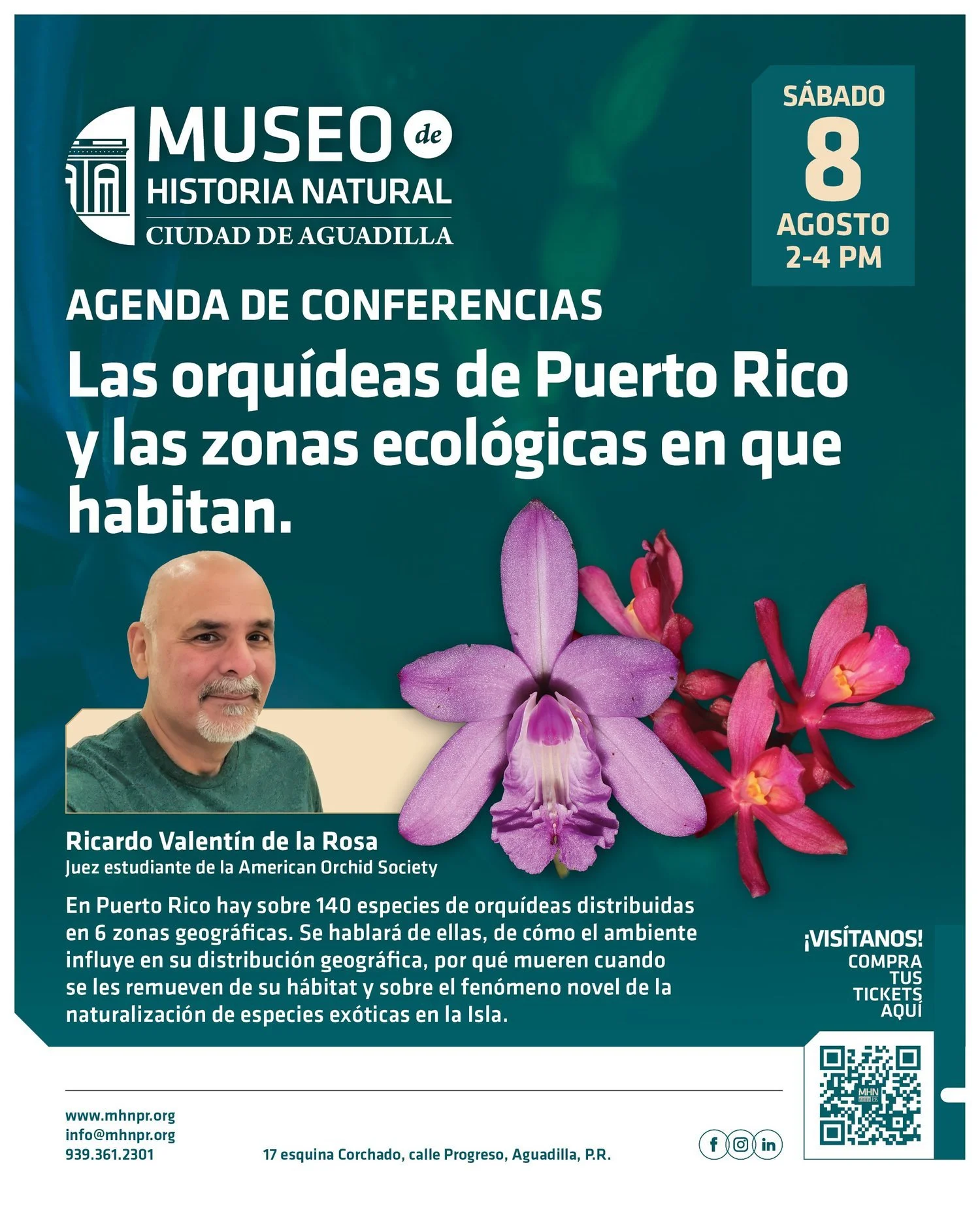
The orchids of Puerto Rico and the ecological zones they inhabit.
Ricardo Valentín de la Rosa
Student judge of the American Orchid Society
In Puerto Rico there are over 140 species of orchids distributed across 6 geographic zones. We will talk about them, about how the environment influences their geographic distribution, why they die when they are removed from their habitat, and about the novel phenomenon of the naturalization of exotic species on the Island.
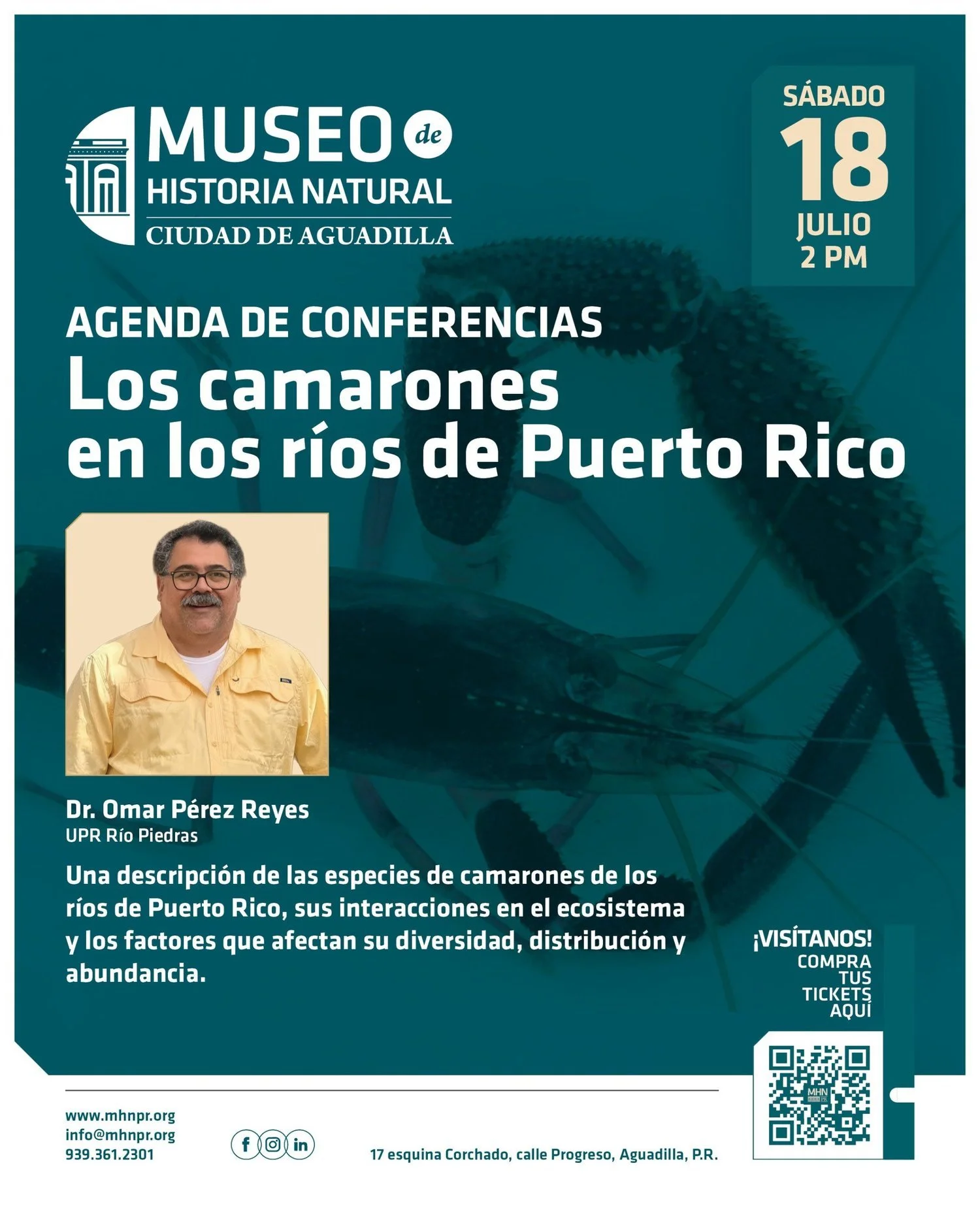
The shrimp in the rivers of Puerto Rico
Lecture by Dr. Omar Pérez Reyes. A description of the shrimp species of the rivers of Puerto Rico, their interactions in the ecosystem, the factors that affect their diversity, distribution and abundance.
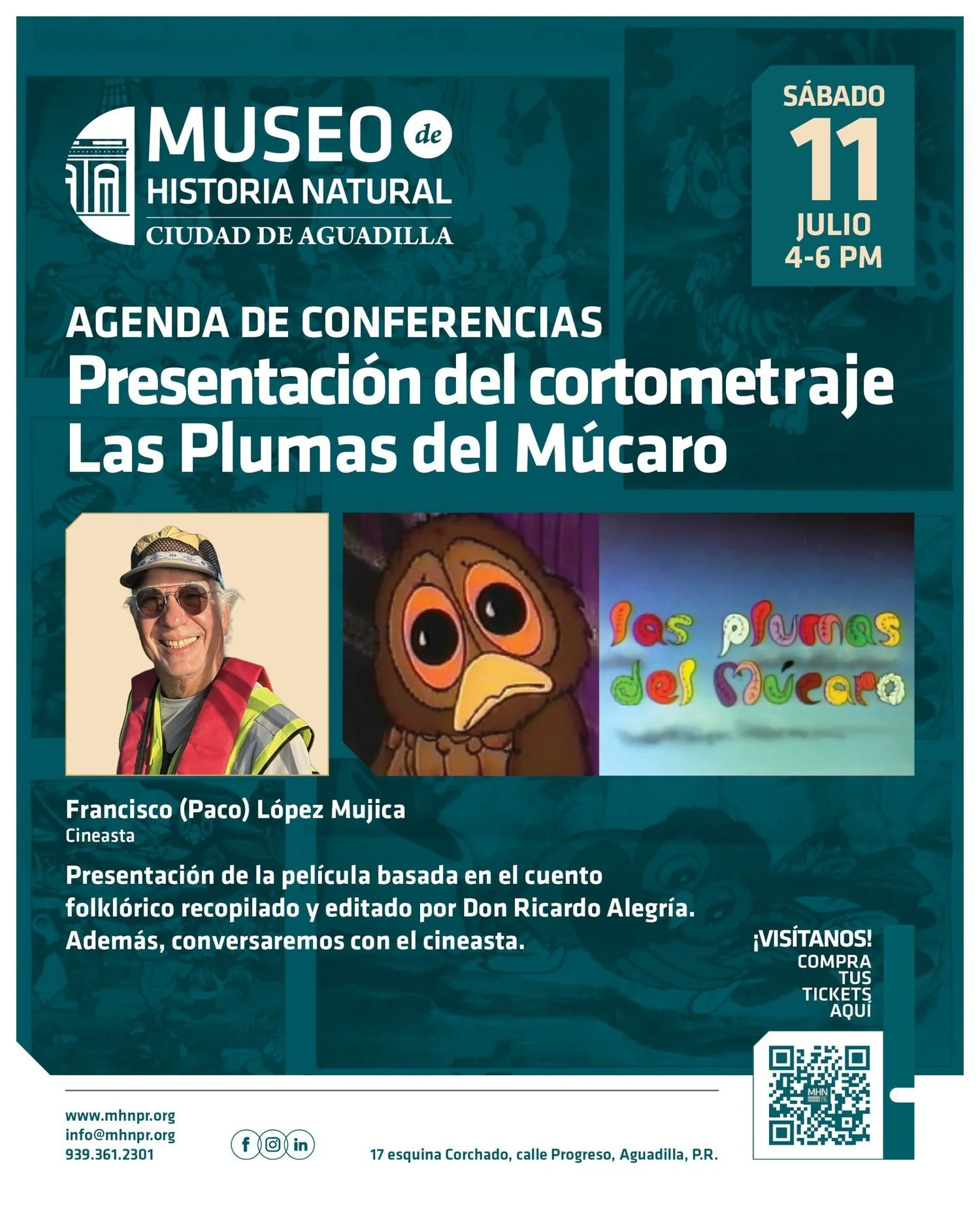
Screening of the short film Las Plumas del Múcaro
Screening of the short film Las plumas del Múcaro, based on the folk tale collected and edited by Don Ricardo Alegría, with filmmaker Francisco “Paco” Lopez.
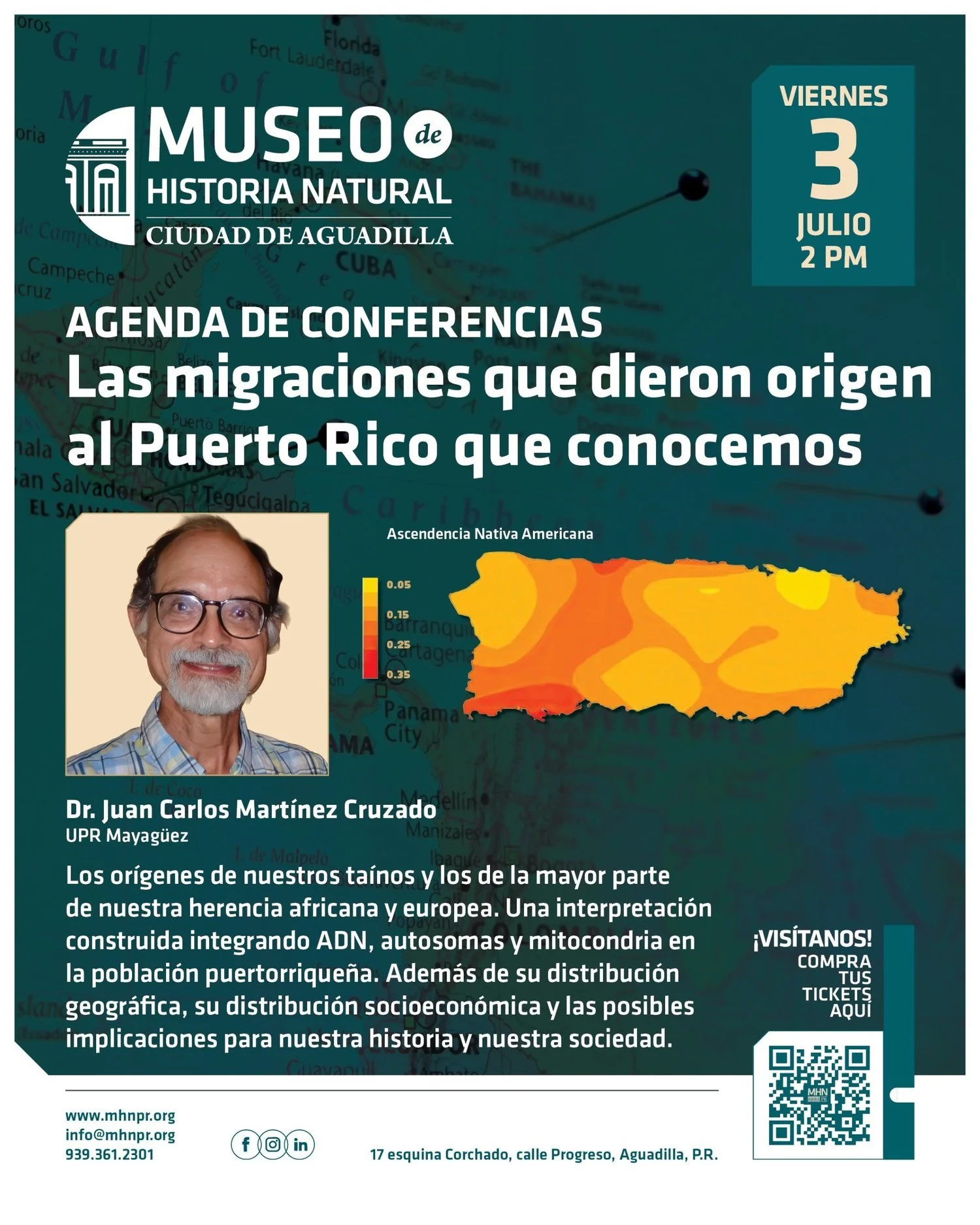
The migrations that gave rise to the Puerto Rico we know
The migrations that gave rise to the Puerto Rico we know.
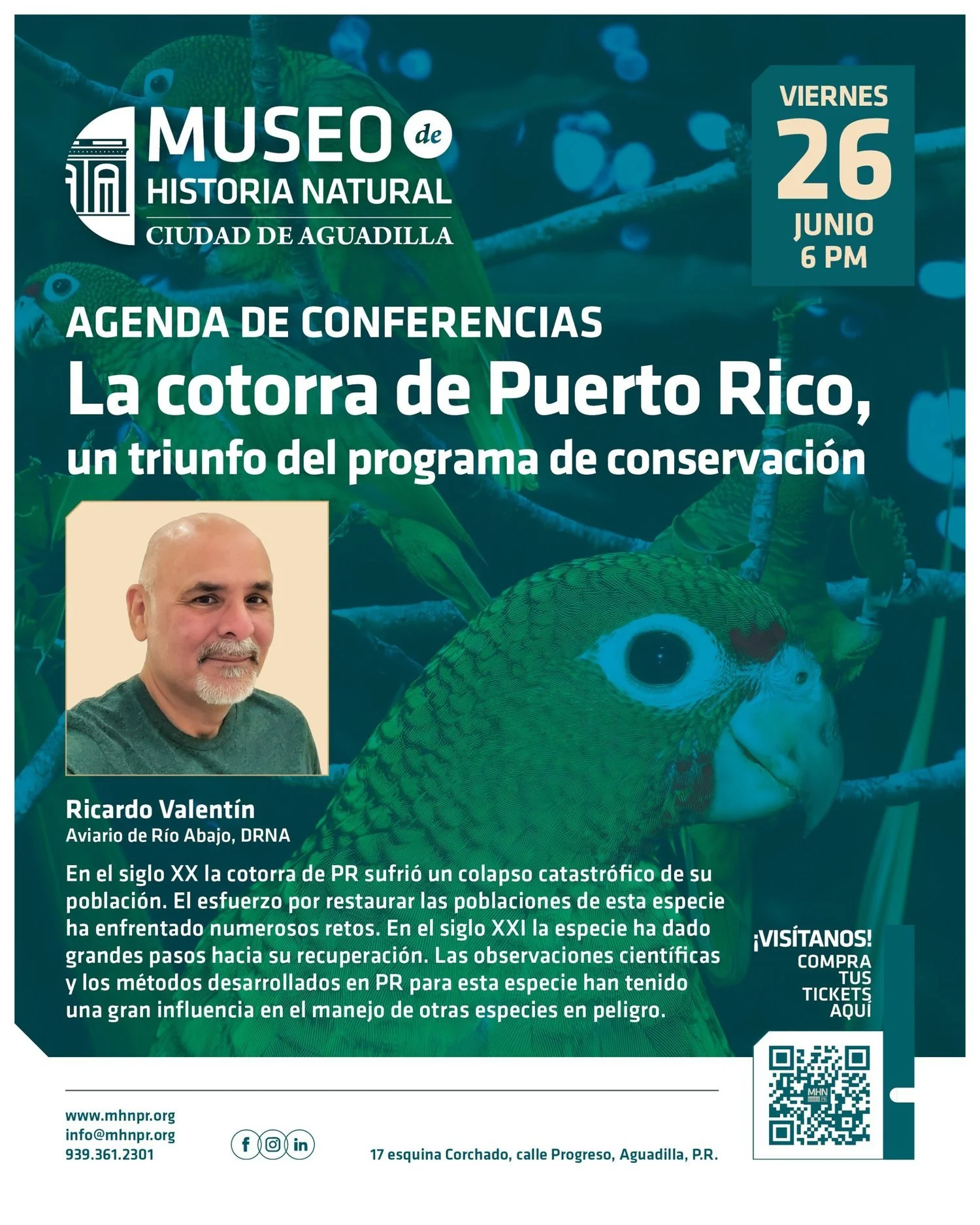
The Puerto Rican parrot; the triumph of a conservation program
Ricardo Valentin-Río Abajo Aviary, DRNA
The Puerto Rican parrot, the triumph of a conservation program.
In the 20th century the Puerto Rican parrot suffered a catastrophic collapse of its population.
The effort to restore the populations of this species has faced numerous challenges.
In the 21st century the
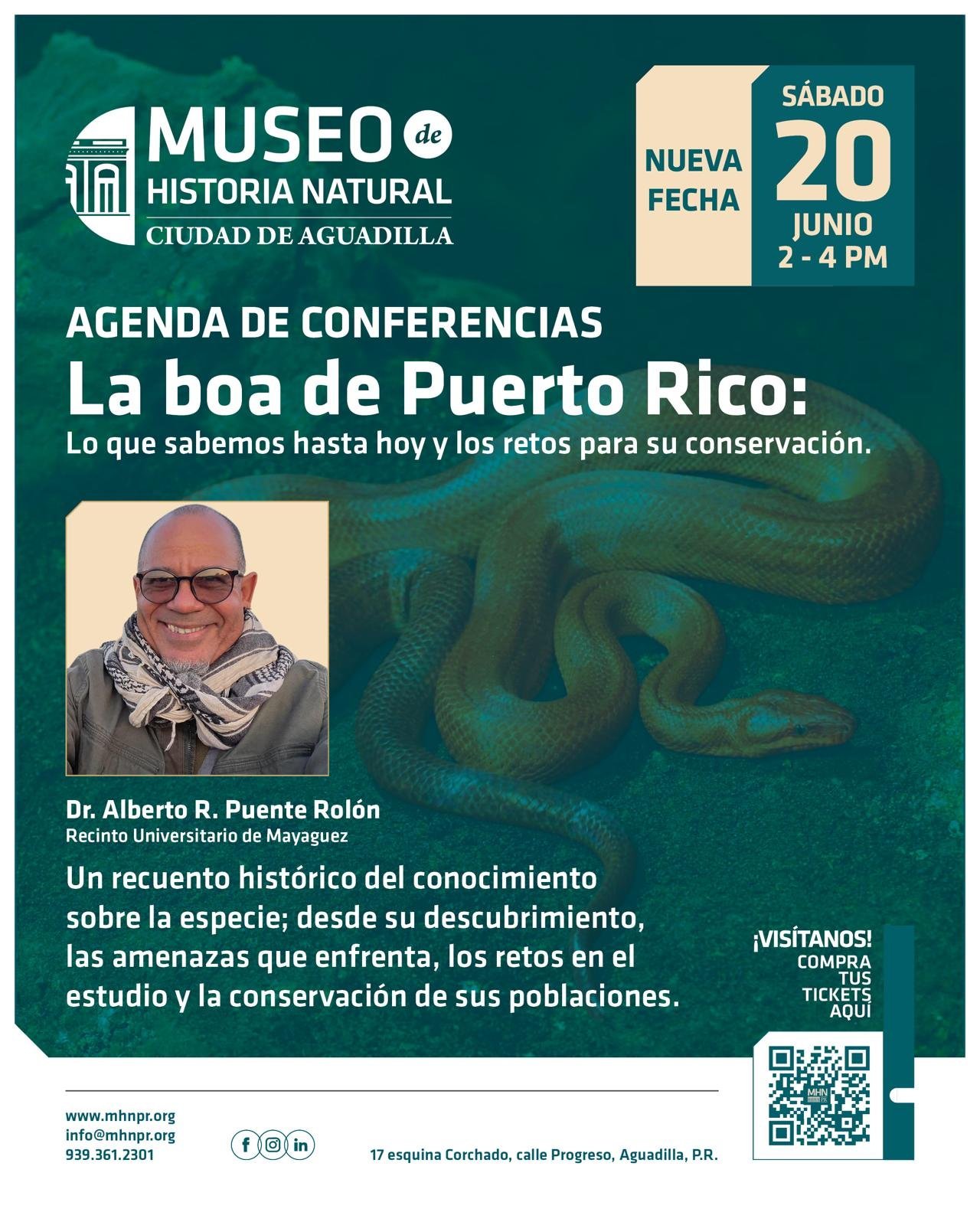
The Puerto Rican boa: what we know so far and the challenges for its conservation
A historical account of what is known about the species: from its discovery, the threats it faces, the challenges in studying and conserving its populations, by Dr. Alberto R. Puente Rolón of the University of Puerto Rico at Mayagüez
get your museum admission ticket on June 20, 2026 or at the museum’s front desk
https://store.mhnpr.org/tickets
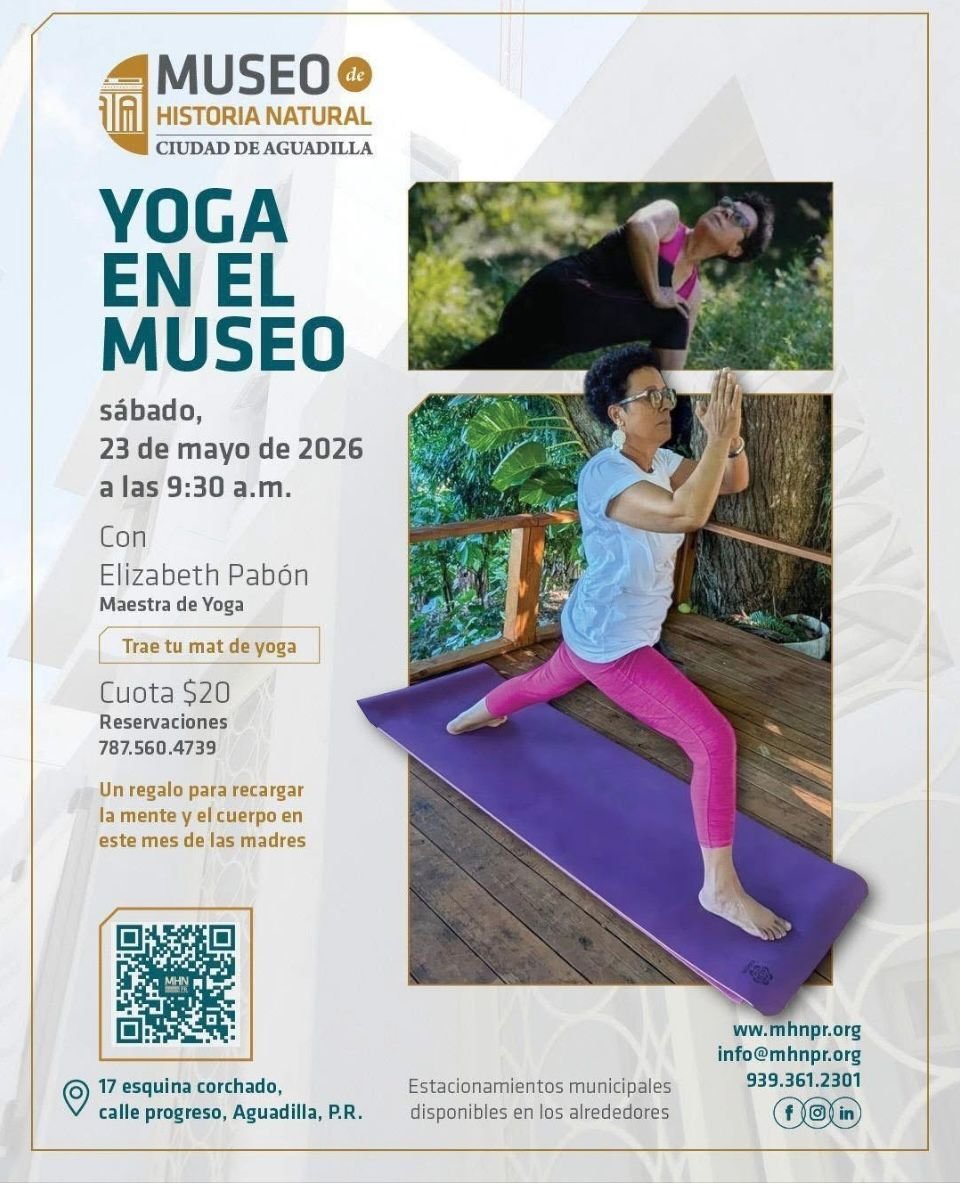
Yoga at the museum
Relax with a yoga class with Elizabeth Pabon and enjoy the wonders of the Museo de Historia Natural y Conservación de Puerto Rico, in Aguadilla.
Meeting of the Puerto Rico Museum Alliance
Members of the Puerto Rico Museum Alliance, welcome to the Museo de Historia Natural y Conservación de Puerto Rico; while you are here, we invite you to enjoy our first exhibitions, Tierra Dinámica and Flora Borinqueniana.
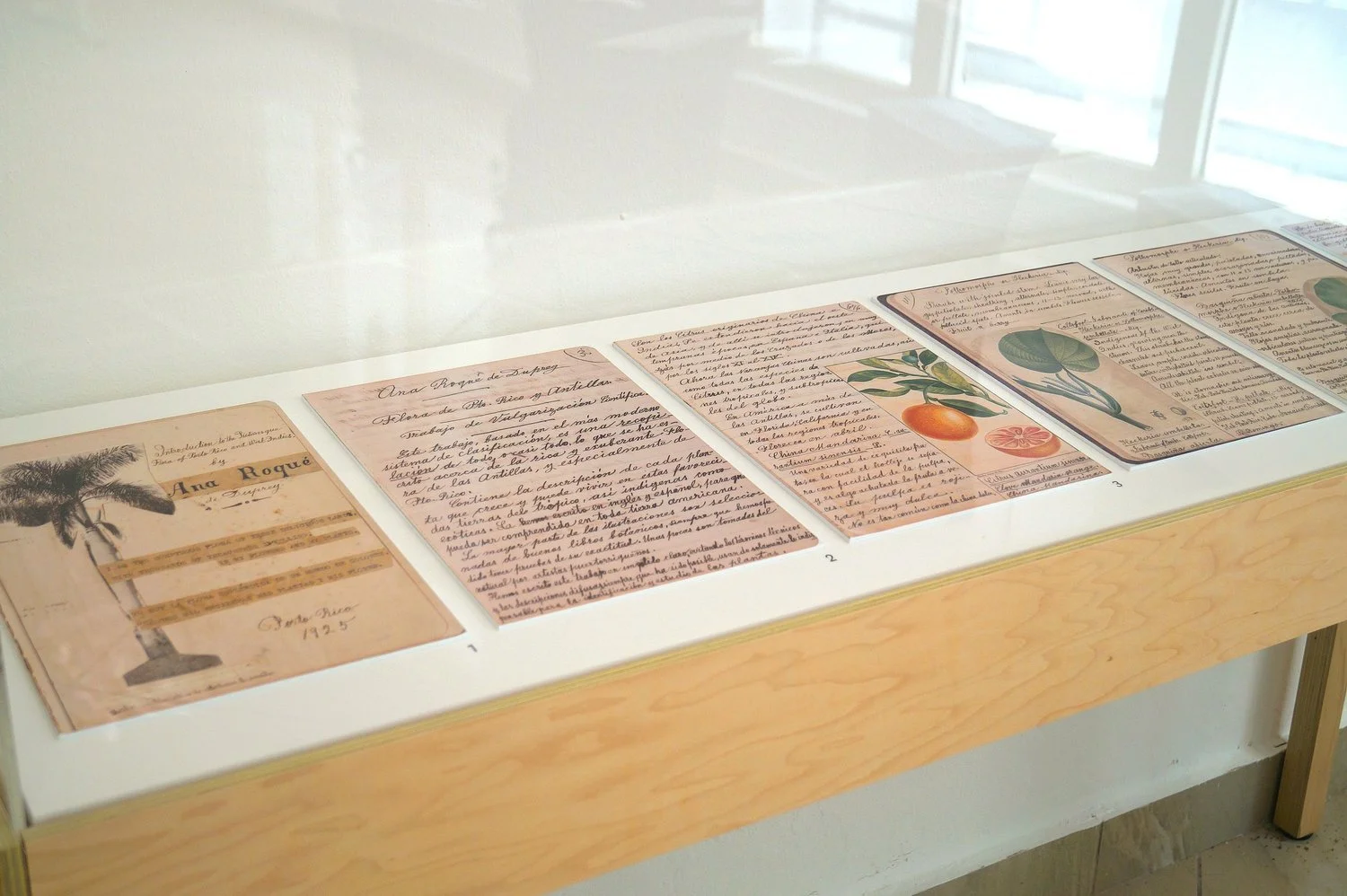
The development and history of the Flora borinqueniana exhibition
With Dr. Eugenio Santiago (UPRRP).
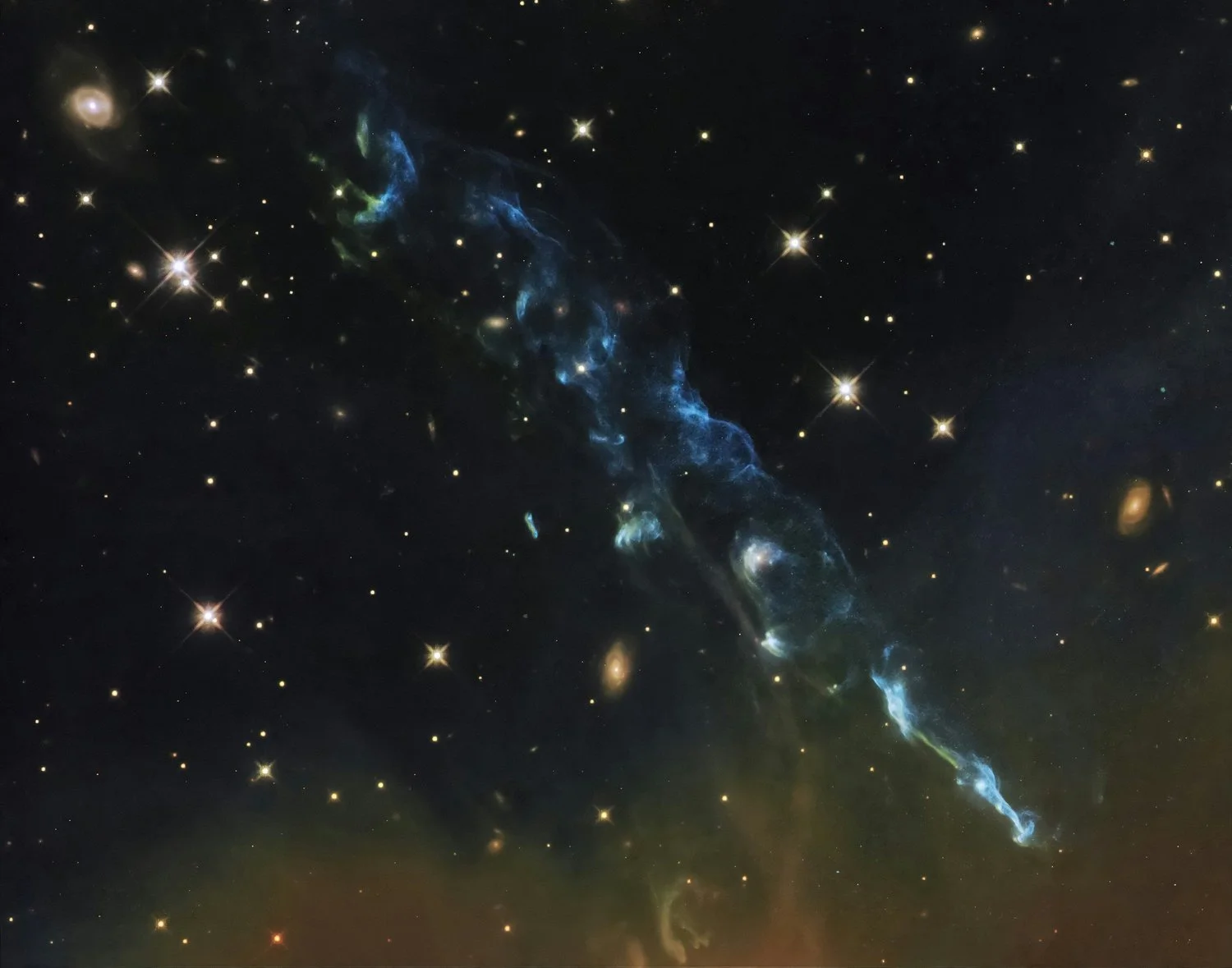
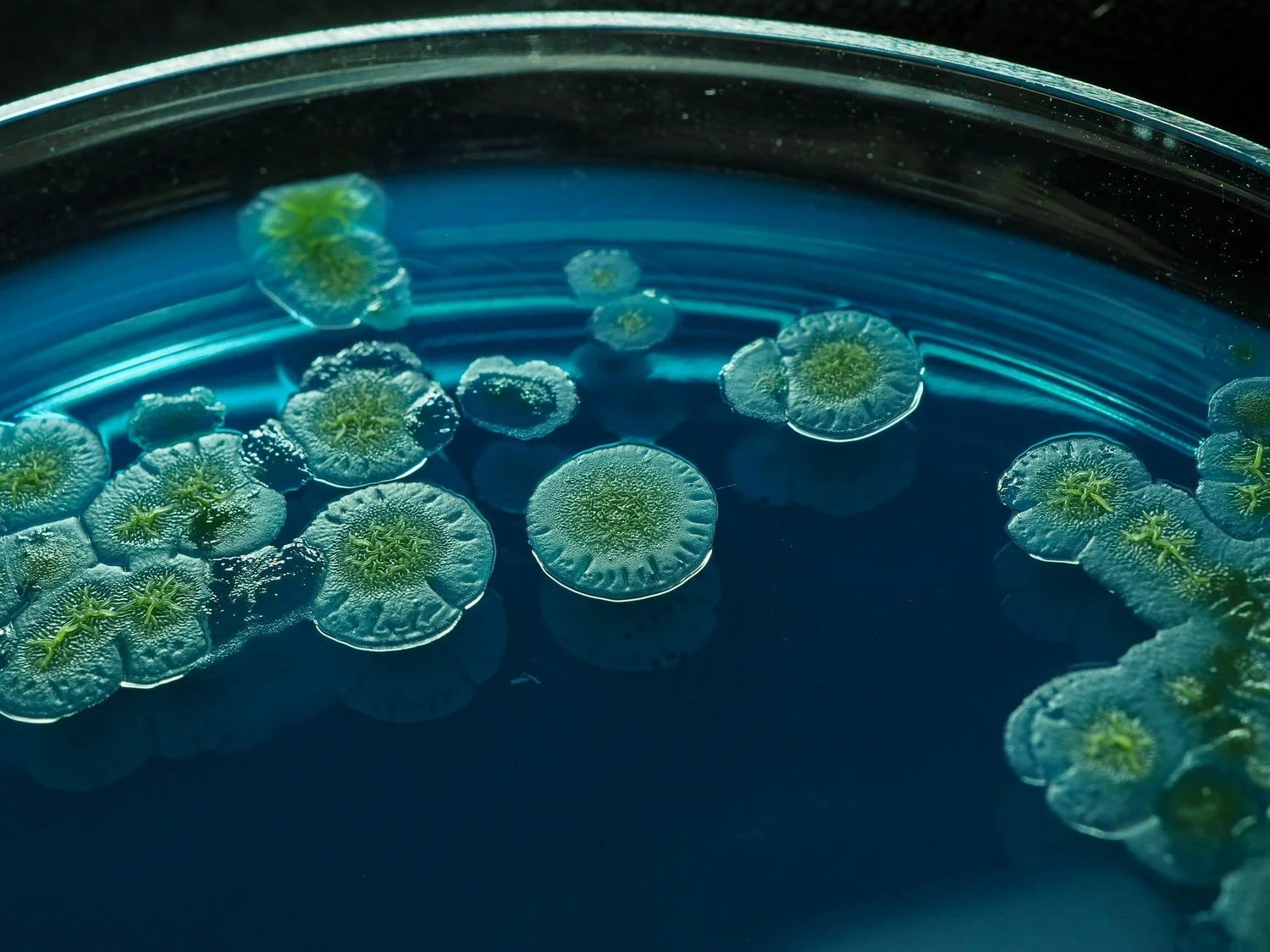
Environmental Microbiology and Natural History
With Dra. Lizbeth Dávila Santiago (Bard College, NY).
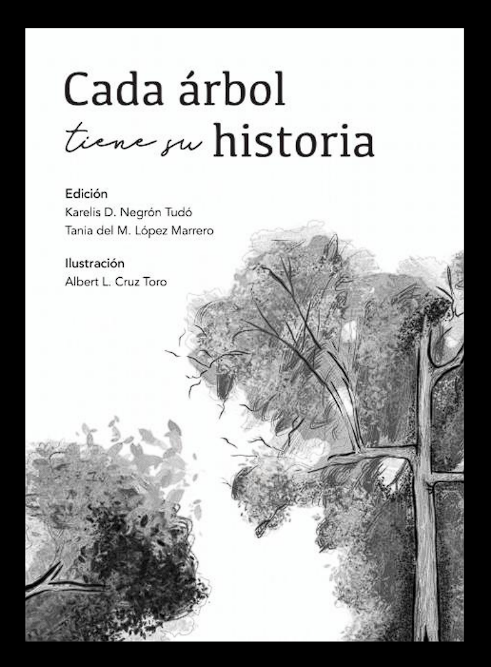
Every tree has its story
Presentation of the book Cada árbol tiene su historia, in which a group of 11 undergraduate students from UPR-Mayagüez, from disciplines as diverse as sociology, comparative literature, art theory, biology, microbiology, geology and engineering, presents a publication that brings together anecdotes, short stories, verses, a letter and even an obituary, in which the authors highlight the importance of trees.
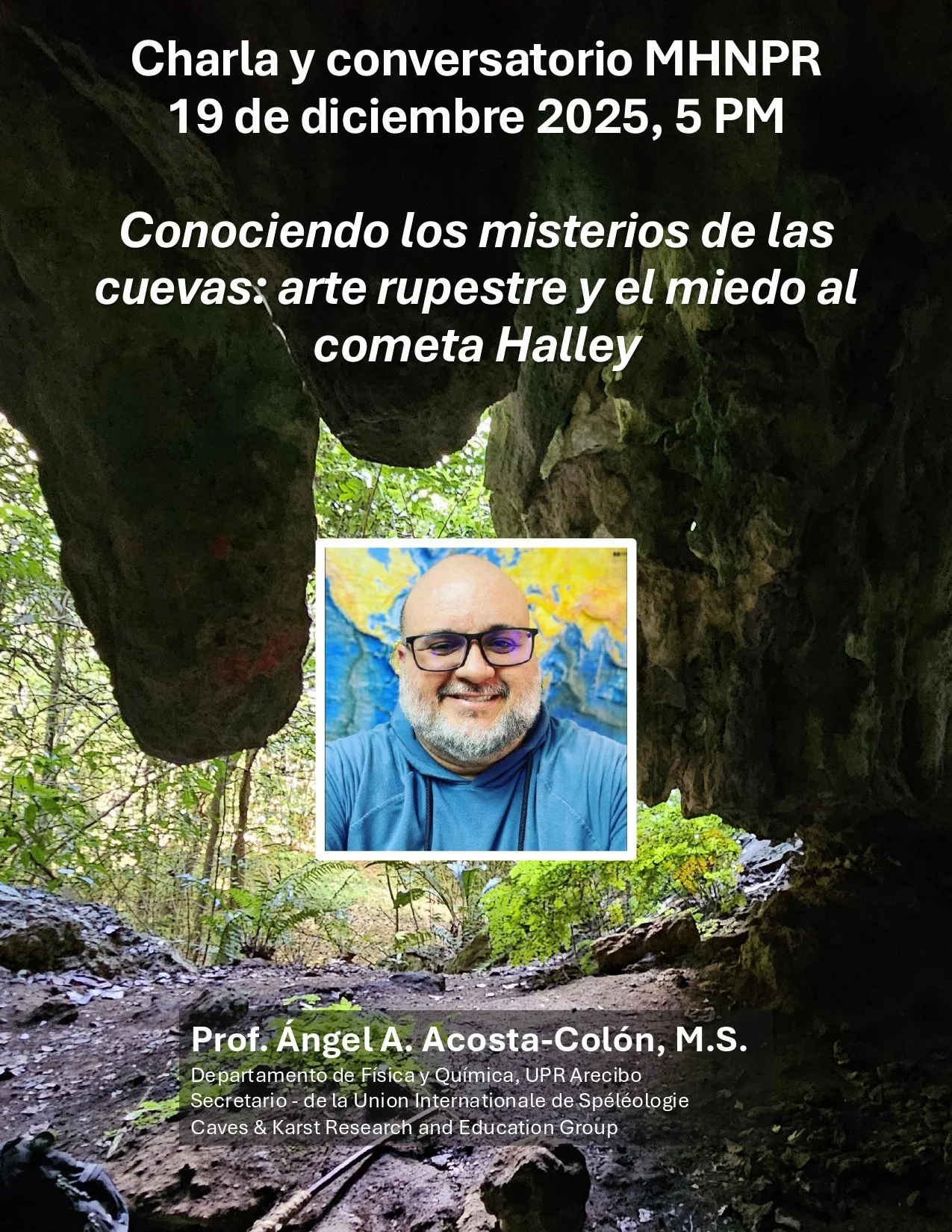
Discovering the mysteries of the caves: rock art and the fear of Halley's Comet
Learn about rock art and the fear of Halley’s Comet with Professor Ángel A. Acosta Colón of the University of Puerto Rico, Arecibo Campus.